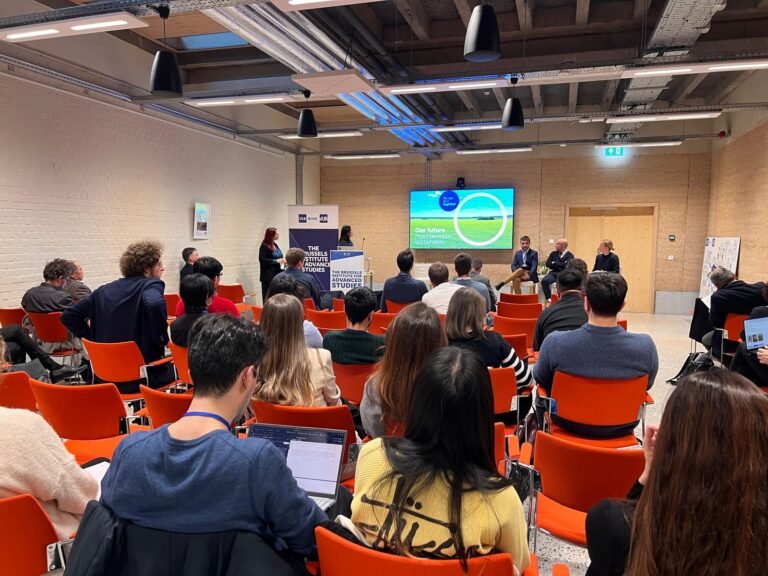
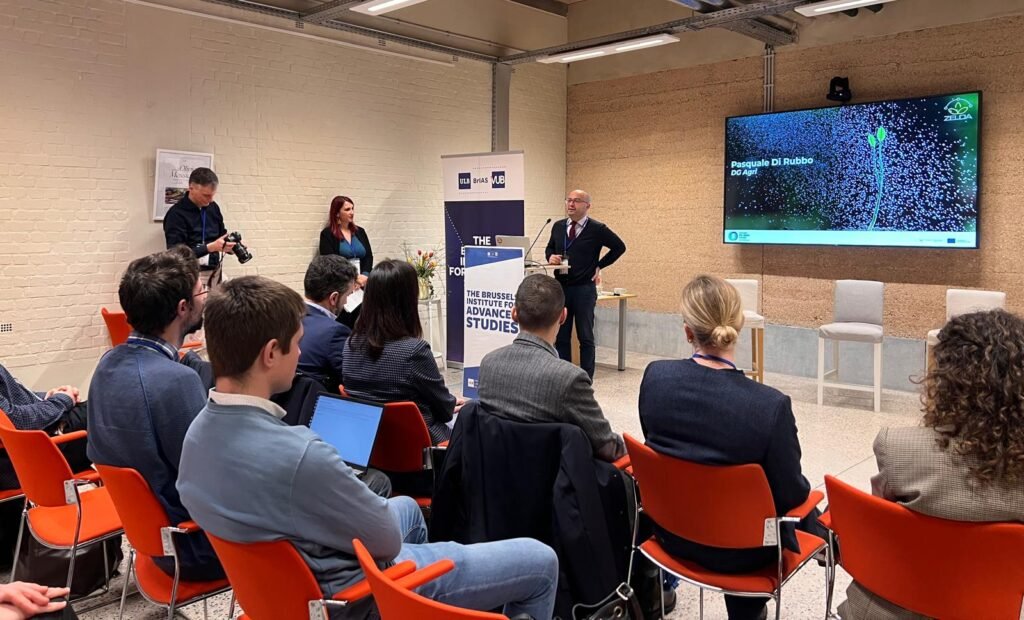
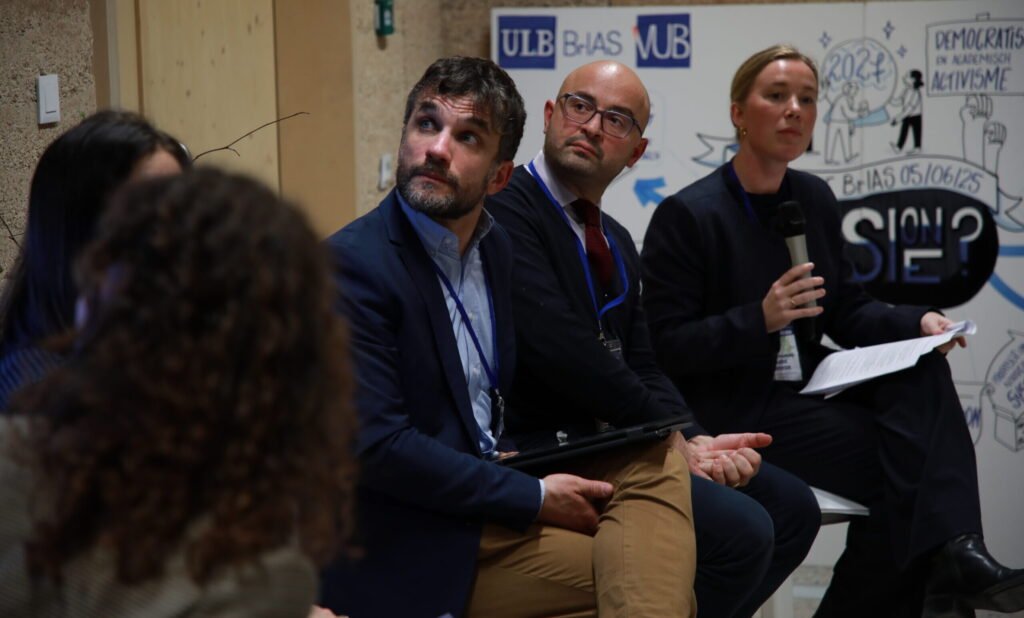
Last 5 February at BrIAS Agri 2026, the ZELDA project organised a high-level policy dialogue exploring policy frameworks and the regulatory, economic, and technological future of smart agriculture in Europe. Moderated by Selenia Marinelli and Susanna Albertini (FVA – New Media Research), the session “Policy Dialogue for Future Innovations in Smart Agriculture” brought together representatives from EU institutions, industry, and farmers’ organisations to discuss how to accelerate innovation in biostimulants, biocontrol, and smart agriculture.
The panel featured:
Structured around short opening statements followed by a guided debate, the session addressed five key dimensions: current policy trends in smart agriculture and biostimulants/biocontrol, impacts of biostimulant-specific policies, EU funding and innovation, regulatory outlook for bio-based plant protection and biosolutions, and the role and impact of e-agriculture at farm level.
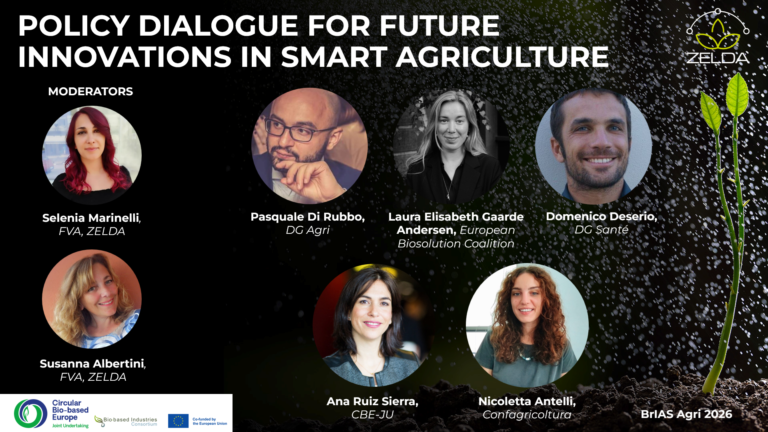
Opening the discussion, representatives from the European Commission emphasised that sustainability cannot be achieved without ensuring farmers’ economic viability.
Recent farmers’ protests across Europe have made income security a central political priority. According to Pasquale Di Rubbo (DG AGRI), the future Common Agricultural Policy (CAP) aims to explore diversified income sources – including bio-based solutions – while facilitating the sector’s transition toward competitiveness and sustainability.
However, the CAP alone cannot drive systemic change. Speakers stressed the need for a broader enabling framework involving all actors along the value chain, from producers to consumers. Simplification of regulatory procedures – without lowering safety standards – is now a declared priority of the Commission.
The geopolitical context further complicates matters. With demographic decline in rural Europe (only around 11-12% of farmers are under 40) generational renewal remains a structural bottleneck for innovation uptake. Meanwhile, Europe faces increasing global competition and shifting trade alliances, making regulatory alignment and strategic autonomy critical.
A central theme of the debate was access to market for biocontrol products.
Under Regulation (EC) No 1107/2009 governing access to market of plant protection products, approval timelines in Europe can stretch up to eight or nine years – significantly longer than in countries such as Brazil. However, Domenico Deserio (DG SANTE) underlined that direct comparisons overlook the EU’s higher safety standards, which remain a political cornerstone.
To address delays, the Commission’s proposed Food and Feed Simplification Package includes:
Importantly, rather than creating an entirely new regulatory framework for biocontrol, the Commission is pursuing targeted amendments to existing legislation – a pragmatic approach seen as more feasible and efficient in the current political climate.
An additional structural challenge lies in expertise gaps within Member States. Risk assessment systems historically built around chemistry now require greater involvement of other professionals, such as microbiologists and biotechnologists, to properly evaluate bio-based products.
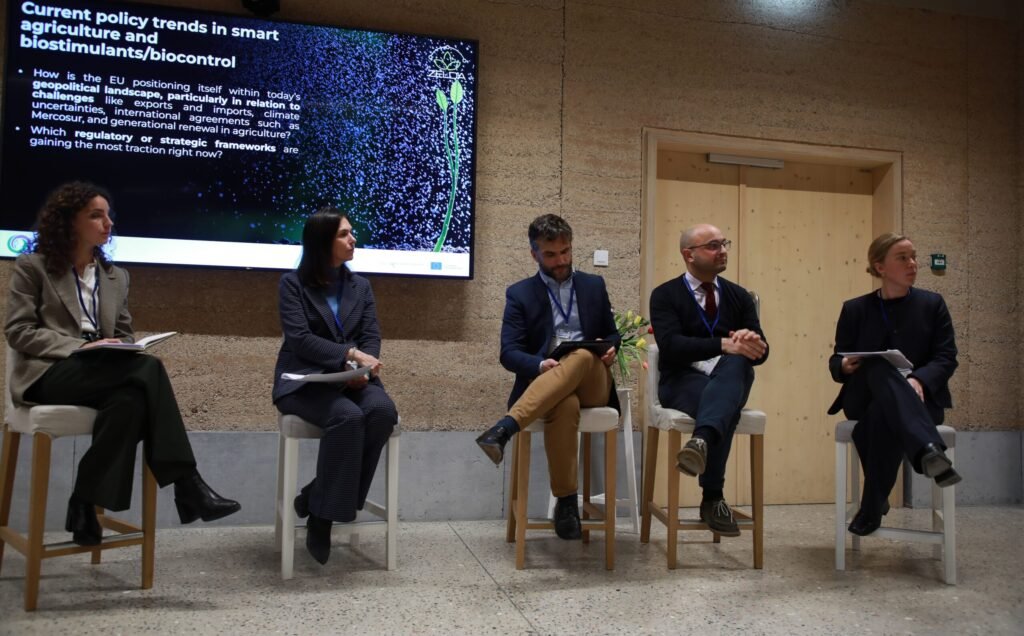
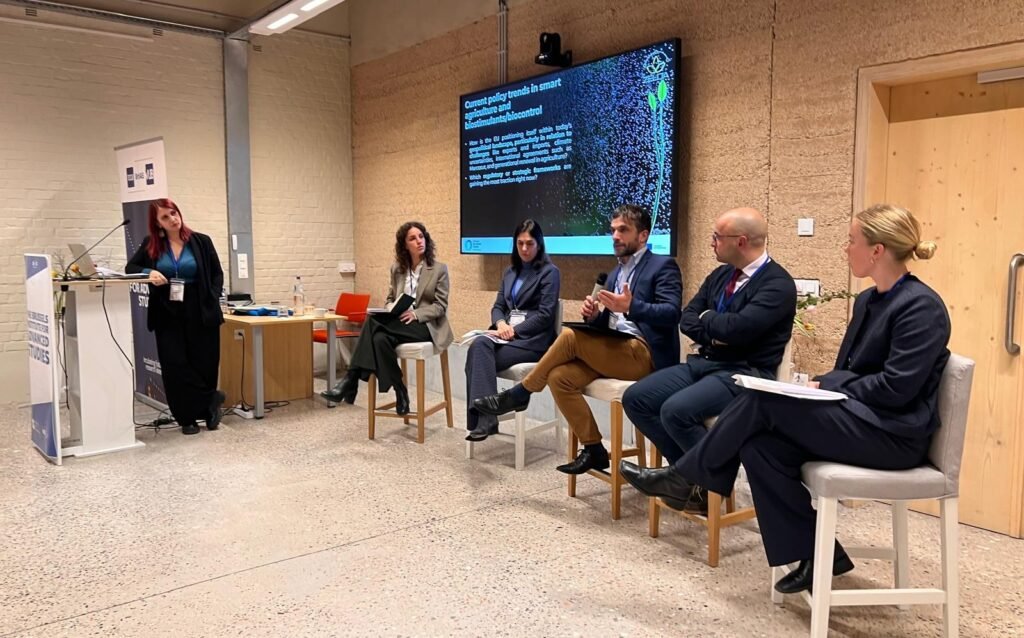
From the industry side, Laura Elisabeth Gaarde Andersen, representing the European Biosolution Coalition, emphasised that regulation itself is not the issue, predictability and strategic alignment are. Safety standards must remain uncompromised, and Europe’s global leadership in safety is seen as a strength, not a barrier, but we must keep up with innovation and work to develop a fitting regulatory framework that is geared for the solutions of today.
What industry calls for is a regulatory and strategic framework that supports green growth, competitiveness, resilience, and strategic autonomy: all current EU priorities where biosolutions can play a central role.
The Coalition is closely monitoring the BioTech Act and welcomed its division into two pillars, allowing greater focus on biological industrial green solutions while maintaining health priorities. However, it expressed concern over the exclusion of novel food applications from regulatory sandboxes, viewing this as a missed innovation opportunity.
Industry representatives also welcomed the “biopesticide boost” within the Food and Feed Safety simplification package and the progress on New Genomic Techniques (NGTs). The Coalition is also monitoring the positioning of biotechnology within FP10 in regards to research and talent development, which is a baseline for innovation.
In a shifting geopolitical landscape, the Coalition sees biosolutions’ momentum as structural rather than temporary. Regulatory clarity and innovation-friendly frameworks are considered essential for Europe to remain competitive, open for business, and strategically autonomous in the biosolutions sector.
From the perspective of Confagricoltura, biostimulant and biocontrol policies are perceived both as opportunity and constraint – depending largely on implementation.
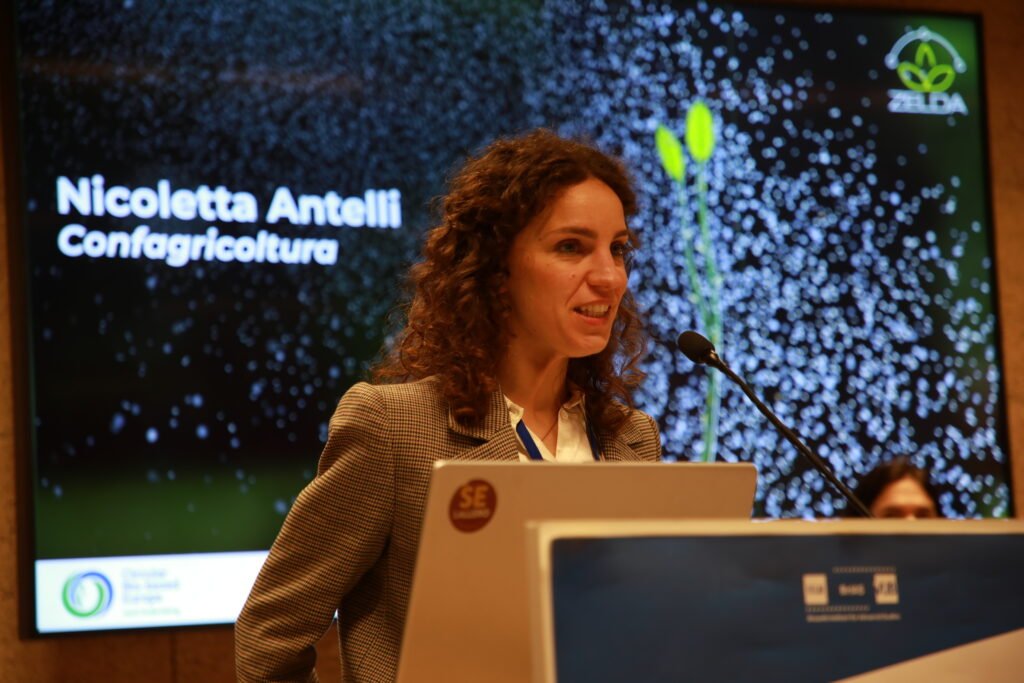
According to Nicoletta Antelli, farmers are generally ready to engage in sustainable transition, provided that:
Digital tools, drones, and precision technologies are increasingly helping farmers reduce input quantities while improving targeting and forecasting. However, concerns persist regarding the complexity of CAP reform and fears that agriculture could lose its “communal identity” within broader funding frameworks.
DG AGRI highlighted new instruments within the upcoming CAP, including transition payments of up to €200,000 for farmers adopting sustainable practices. Yet uptake of knowledge-transfer and advisory mechanisms remains limited, signalling the need for stronger reskilling and extension services.
EU-funded programs are playing a crucial role in bridging innovation and implementation.
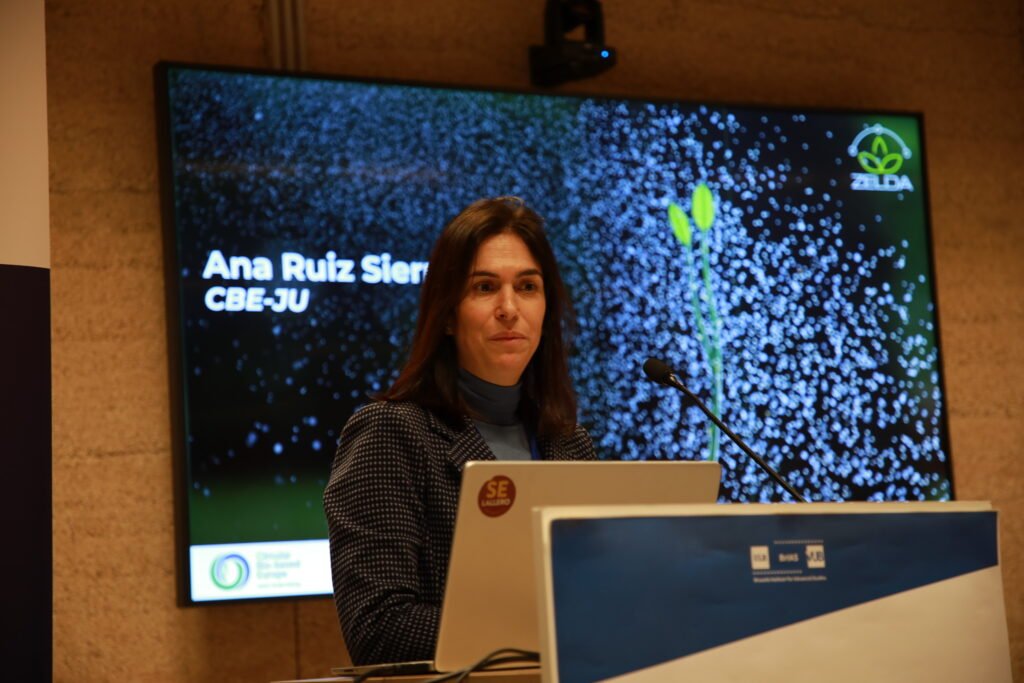
Ana Ruiz Sierra from Circular Bio-based Europe Joint Undertaking (CBE JU) explained how public-private partnerships support research and innovation with the aim to accelerate scaling of bio-based solutions. Innovations are needed to meet policy goals (delivering high environmental results while competitiveness is maintained) and should be available to farmers.
Specifically, CBE JU calls prioritise:
Valorisation of residues, side-streams, and wastes
Beyond crop protection, the bioeconomy offers farmers new roles as biomass suppliers. Agricultural side streams and residues can feed biorefineries, creating complementary revenue streams and integrating farmers more deeply into bio-based value chains. A CBE JU working group on primary producers has been set out with the aim to develop and implement an action plan focused on empowering the role of primary producers in circular bio-based value chains and ensuring that primary producers benefit from the involvement in these value chains.
Looking ahead, the Commission’s proposed Multiannual Financial Framework (MFF) allocates substantial resources to competitiveness, biotechnology, and rural innovation including €20 billion under the future Horizon program for biotech and bio-based solutions.
The number of bio-based plant protection products is increasing, driven partly by the phase-out of hazardous synthetic pesticides. However, several challenges remain:
Panelists agreed that regulatory predictability is essential not only for innovators but also for investors. Without clear timelines, financing remains fragile.
At the same time, Europe’s strong safety standards were widely acknowledged as a strategic asset rather than a weakness.
Digital agriculture is reshaping on-farm decision-making. Data-driven tools enable farmers to apply inputs more precisely, forecast pest outbreaks, and optimize resource use.
Yet significant barriers persist:
Speakers emphasised that technological solutions alone cannot drive transformation. Generational renewal, training, and improved rural living conditions are equally critical.
The ZELDA policy dialogue highlighted a sector in transition: economically pressured, geopolitically exposed, but technologically dynamic.
Three key conclusions finally emerged:
The conversation at BrIAS Agri 2026 made one thing clear: as the EU prepares its next funding cycle starting in 2028, the coming months will be decisive for shaping national strategic plans and ensuring that smart agriculture moves from pilot success stories to widespread adoption.